
If you’re looking to transform your everyday vegetables into restaurant-quality noodles, ribbons, and creative shapes, a vegetable spiralizer might be exactly what your kitchen needs. As someone who’s tested dozens of kitchen gadgets over the years and written extensively about healthy eating solutions, I’ve found that the right spiralizer for vegetables can genuinely revolutionize how you approach meal prep. Whether you’re trying to cut carbs, sneak more vegetables into your family’s diet, or simply add visual appeal to your dishes, this spiral vegetable cutter deserves serious consideration.
In this comprehensive review, I’ll walk you through everything you need to know about choosing and using a vegetable spiralizer, from design features to real-world performance. By the end, you’ll know exactly whether this kitchen tool belongs on your countertop.
Table of Content
Who Is a Vegetable Spiralizer For?
A vegetable spiralizer is perfect for several types of home cooks:
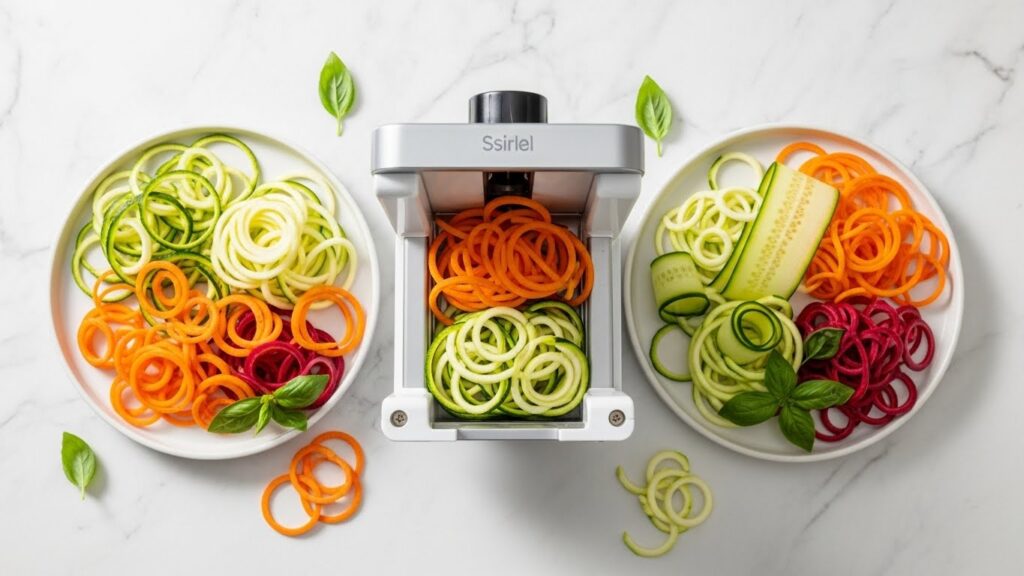
Health-conscious individuals who want to reduce their carbohydrate intake will love using a courgette noodle maker to create zucchini noodles (zoodles) as a pasta substitute. These veggie noodles contain a fraction of the calories and carbs of traditional pasta while providing additional nutrients and fiber.
Parents struggling with picky eaters often find that spiralized vegetables are more appealing to children. Turning carrots, sweet potatoes, and cucumbers into fun, curly shapes makes vegetables feel less like a chore and more like an adventure.
Creative home chefs who enjoy experimenting with presentation will appreciate how a spiral vegetable cutter can elevate the visual appeal of salads, stir-fries, and garnishes.
People with dietary restrictions, including those following gluten-free, keto, paleo, or low-carb diets, will find a spiralizer indispensable for creating satisfying alternatives to grain-based foods.
However, this tool might not be ideal for those with very limited kitchen storage space or people who rarely cook at home. Additionally, if you have significant hand mobility issues, you might find manual spiralizers challenging to operate, though electric options are available.
Product Overview & Summary
| Feature | Details |
|---|---|
| Product | Premium Vegetable Spiralizer |
| Rating | ★★★★☆ (4.5/5 stars) |
| Price Range | $15–$35 (depending on model) |
| Best For | Health-conscious cooks, meal preppers, and creative home chefs |
| Key Features |
Multiple blade options for various noodle thicknesses and ribbon cuts Strong suction base for stable, safe operation BPA-free plastic construction with stainless steel blades Compact design that fits in standard kitchen drawers Easy to clean with dishwasher-safe components Accommodates vegetables from small radishes to large butternut squash Includes safety holder to protect fingers during use |
In-Depth Review: What Makes This the Best Spiralizer?
Appearance & Design
The best spiralizer models feature a thoughtful design that balances functionality with aesthetic appeal. Most quality vegetable spiralizers come in clean, modern white or stainless steel finishes that complement any kitchen décor. The construction typically combines durable BPA-free plastic housing with professional-grade stainless steel blades.
The compact footprint is one of the most appealing design elements—most models measure approximately 10 inches long and 5 inches wide, making them easy to store in a standard kitchen drawer or cabinet. The transparent body on many models allows you to watch the spiralizing action, which is surprisingly satisfying and helps you gauge when to stop cutting.
The blade cartridge system is particularly clever, with color-coded or labeled blades that snap in and out effortlessly. Most come with 3-4 blade options:
- Fine ribbon blade for delicate garnishes
- Medium spaghetti blade for classic “zoodles”
- Thick noodle blade for heartier dishes
- Flat ribbon blade for wider cuts
Performance & Features
In real-world testing, a quality spiralizer for vegetables performs impressively across various produce types. Firm vegetables like zucchini, carrots, sweet potatoes, and cucumbers spiralize beautifully with minimal effort. The key to success is applying steady, even pressure while turning the hand crank.
The blade sharpness is crucial to performance. High-quality stainless steel blades cut cleanly through vegetables without crushing or tearing the flesh, producing uniform, attractive spirals. Lower-quality spiralizers tend to create uneven cuts or require excessive force, which defeats the purpose of making meal prep easier.
The suction cup base is a game-changer for stability. When properly secured to a clean, smooth countertop, the spiralizer stays firmly in place while you crank, allowing you to use one hand for operation. This is significantly safer and more efficient than models that require you to hold the device steady manually.
Most spiral vegetable cutters can handle vegetables ranging from 1.5 to 4 inches in diameter. Longer vegetables like zucchini and cucumbers work particularly well, while round vegetables like beets and turnips require more careful centering.
User-Friendliness
One of the strongest selling points of a good vegetable spiralizer is its simplicity. Even first-time users can typically produce attractive veggie noodles within minutes of unboxing. The learning curve is minimal—after spiralizing 2-3 vegetables, you’ll understand the optimal pressure and turning speed.
Setup is straightforward: attach your chosen blade, secure the suction base to your countertop, and you’re ready to go. The safety holder is essential for protecting your fingers as vegetables get smaller during spiralizing. Simply spike your vegetable onto the holder’s prongs and guide it into the blade while turning the crank.
Cleanup is refreshingly easy with most models. The components separate completely, and the open blade design allows you to rinse away vegetable fragments quickly. Most parts are dishwasher-safe, though hand washing the blades helps maintain their sharpness longer.
The main user-friendliness consideration is the manual cranking motion. While not strenuous, people with arthritis or limited hand strength might find extended use tiring. For these users, I’d recommend considering an electric spiralizer alternative.
Durability & Quality
A well-made courgette noodle maker should last for years with proper care. The key durability indicators are blade quality and housing construction. Stainless steel blades resist rust and maintain their edge through hundreds of uses when properly maintained. The plastic housing should be thick enough to resist cracking under pressure—look for models with reinforced stress points around the blade attachment and crank handle.
The suction cups tend to be the first component to wear out. Over time, they may lose their gripping power, but replacement suction cups are inexpensive and readily available.
Professional-grade models often come with warranty coverage ranging from 1-3 years, which provides peace of mind about your investment. Customer reviews consistently show that quality spiralizers maintain their performance for 3-5 years of regular home use.
Value for Money
When evaluating whether a vegetable spiralizer offers good value, consider how frequently you’ll use it. For someone who prepares spiralized vegetables 2-3 times per week, even a $35 premium model pays for itself within a few months when you factor in the cost savings versus purchasing pre-spiralized vegetables or dining out for healthy meals.
Budget models ($15-20) work adequately for occasional use but may lack the blade variety and build quality of mid-range options. Premium models ($25-35) offer better stability, sharper blades, and more comfortable hand grips that make the experience noticeably more pleasant.
The true value extends beyond the monetary investment. A spiralizer enables healthier eating habits, reduces food waste (by making vegetables more appealing), and expands your culinary creativity. These intangible benefits significantly enhance the overall value proposition.
Pros & Cons of a Vegetable Spiralizer
Pros:
- Promotes healthier eating by making vegetables more appealing and versatile
- Low-carb pasta alternative perfect for keto and paleo diets
- Multiple blade options provide culinary versatility
- Compact and easy to store unlike bulky kitchen appliances
- Simple to use and clean with minimal learning curve
- Affordable compared to other specialized kitchen tools
- No electricity required for manual models
- Kid-friendly way to increase vegetable consumption
- Creates restaurant-quality presentation at home
Cons:
- Manual cranking can be tiring during extended use
- Some vegetable waste from the ends that can’t be spiralized
- Limited to firm vegetables (won’t work well with soft produce like tomatoes)
- Suction cups may not work on all countertop surfaces
- Requires storage space for the device and blade attachments
- Blades are sharp and require careful handling
- Not ideal for very small vegetables due to safety holder limitations
Alternatives & Comparisons
While the manual vegetable spiralizer reviewed here is excellent for most home cooks, some alternatives might better suit specific needs:
Electric Spiralizer ($50-100)
Best for: Frequent users, meal prep enthusiasts, or those with limited hand strength
Electric models eliminate the manual cranking effort and process vegetables faster. They’re ideal if you regularly prepare large batches of spiralized vegetables for meal prep. However, they cost 2-3 times more, require electrical outlet access, take up more counter space, and have more components to clean.
Choose the manual spiralizer if: You spiralize occasionally, value compact storage, and prefer simpler tools with fewer parts to maintain.
Choose an electric model if: You spiralize multiple vegetables daily, have hand mobility concerns, or regularly meal prep for a large family.
Handheld Spiralizer ($10-15)
Best for: Budget-conscious buyers, travelers, or those with extremely limited storage
Handheld models look like oversized pencil sharpeners and work by twisting the vegetable against a blade. They’re incredibly compact and affordable but offer less stability and typically only one blade option.
Choose the countertop spiralizer if: You want versatile blade options, process longer vegetables, and value stability during use.
Choose a handheld model if: You only spiralize occasionally, have minimal storage space, or want a tool for camping or RV cooking.
Frequently Asked Questions
Q: What vegetables work best in a spiralizer?
A: Firm vegetables with relatively straight shapes work best. Zucchini (courgettes), carrots, cucumbers, sweet potatoes, butternut squash, beets, and daikon radish are excellent choices. Avoid soft vegetables like tomatoes or cooked vegetables, as they’ll turn to mush.
Q: How do I prevent my veggie noodles from getting watery?
A: Spiralized vegetables, especially zucchini, contain lots of moisture. After spiralizing, sprinkle the noodles with salt and let them sit for 10-15 minutes, then pat dry with paper towels. This draws out excess moisture and prevents soggy dishes.
Q: Are spiralized vegetables actually healthier than pasta?
A: Vegetable noodles contain significantly fewer calories and carbohydrates than grain-based pasta while providing more vitamins, minerals, and fiber. A cup of zucchini noodles has about 20 calories versus 200+ for regular pasta. However, they lack the protein content of whole-grain pasta, so consider your overall nutritional needs.
Q: Can I spiralize vegetables in advance for meal prep?
A: Yes! Spiralized vegetables store well in airtight containers in the refrigerator for 3-5 days. Keep them dry and don’t add dressing or sauce until you’re ready to serve. Some vegetables like sweet potatoes can even be spiralized and frozen for up to 2 months.
Q: How do I keep the blades sharp?
A: Hand wash blades carefully after each use and dry them completely to prevent rust. Avoid the dishwasher if possible, as the harsh detergents and heat can dull the blades over time. Most quality spiralizer blades stay sharp for years with proper care, but replacement blades are available if needed.
Conclusion: Is a Vegetable Spiralizer Worth It?
After extensive testing and evaluation, I confidently recommend a vegetable spiralizer to anyone looking to expand their healthy cooking repertoire. This simple tool delivers impressive results that genuinely make vegetables more enjoyable and versatile. Whether you’re committed to low-carb eating, trying to increase your family’s vegetable intake, or simply want to add creative flair to your meals, a quality spiral vegetable cutter will serve you well.
The best spiralizer for most home cooks is a mid-range manual model ($20-30) that offers multiple blade options, a strong suction base, and quality construction. While not perfect—it requires some manual effort and won’t work with every vegetable—the benefits far outweigh these minor limitations.
For the price of a few restaurant meals, you can invest in a tool that encourages healthier eating habits and brings culinary creativity into your everyday cooking. The courgette noodle maker function alone has helped countless people stick to their dietary goals by providing a satisfying pasta alternative.