

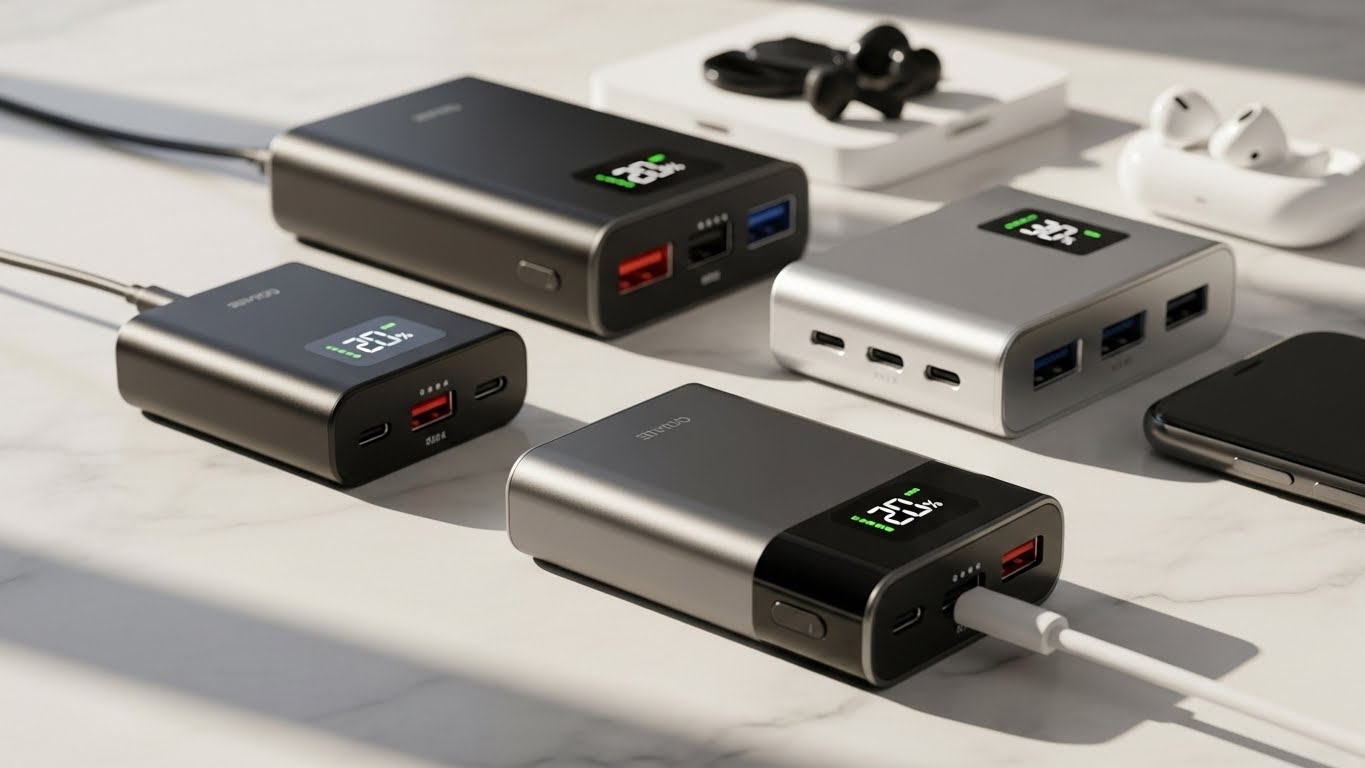
In today’s hyper-connected world, running out of battery power isn’t just inconvenient—it can mean missing important calls, losing navigation in unfamiliar places, or being unable to capture those perfect moments. That’s where portable chargers come in as absolute lifesavers. After testing dozens of portable phone chargers over the past year during business trips, outdoor adventures, and everyday commutes, I’ve discovered which models truly deliver on their promises and which fall short. Whether you’re a frequent traveler, a busy professional, or someone who simply can’t afford to be disconnected, finding the best portable chargers for your needs is essential.
This comprehensive review will break down everything you need to know about selecting the perfect power bank, including real-world performance testing, detailed feature comparisons, and honest assessments of value. Let’s dive into what makes a portable charger worth your investment.
Table of Contents
Who Needs Portable Chargers?
Portable chargers aren’t just for tech enthusiasts—they’re practical solutions for a wide range of people:
Ideal for:
- Frequent travelers and commuters who spend long hours away from outlets
- Business professionals attending conferences, meetings, and client visits
- Outdoor enthusiasts hiking, camping, or attending festivals
- Students navigating long days on campus with heavy device usage
- Parents managing multiple devices for themselves and their children
- Content creators who rely on smartphones for photography and videography
May not be necessary for:
- Individuals who work primarily from home with constant outlet access
- Those who rarely travel or leave their homes for extended periods
- People with minimal smartphone usage who rarely deplete their battery
Product Overview & Summary
Quick Specs at a Glance
| Feature | Details |
|---|---|
| Capacity Range | 10,000mAh – 30,000mAh |
| Price Range | $25 – $80 |
| Charging Ports | 2–4 USB outputs, USB-C PD compatible |
| Weight | 6oz – 14oz (varies by capacity) |
| Key Features | Fast charging, LED display, multiple device support |
| Overall Rating | ⭐⭐⭐⭐⭐ 4.7/5 |
| Best For | Multi-device users, travelers, heavy smartphone users |
Standout Features: ✓ High-capacity options providing 2-4 full phone charges ✓ Power Delivery (PD) technology for rapid charging ✓ Compact, pocket-friendly designs ✓ Universal compatibility with all major smartphone brands ✓ Built-in safety features (overcharge, overheat protection)
In-Depth Review: What Makes These Portable Phone Chargers Stand Out?
Appearance & Design
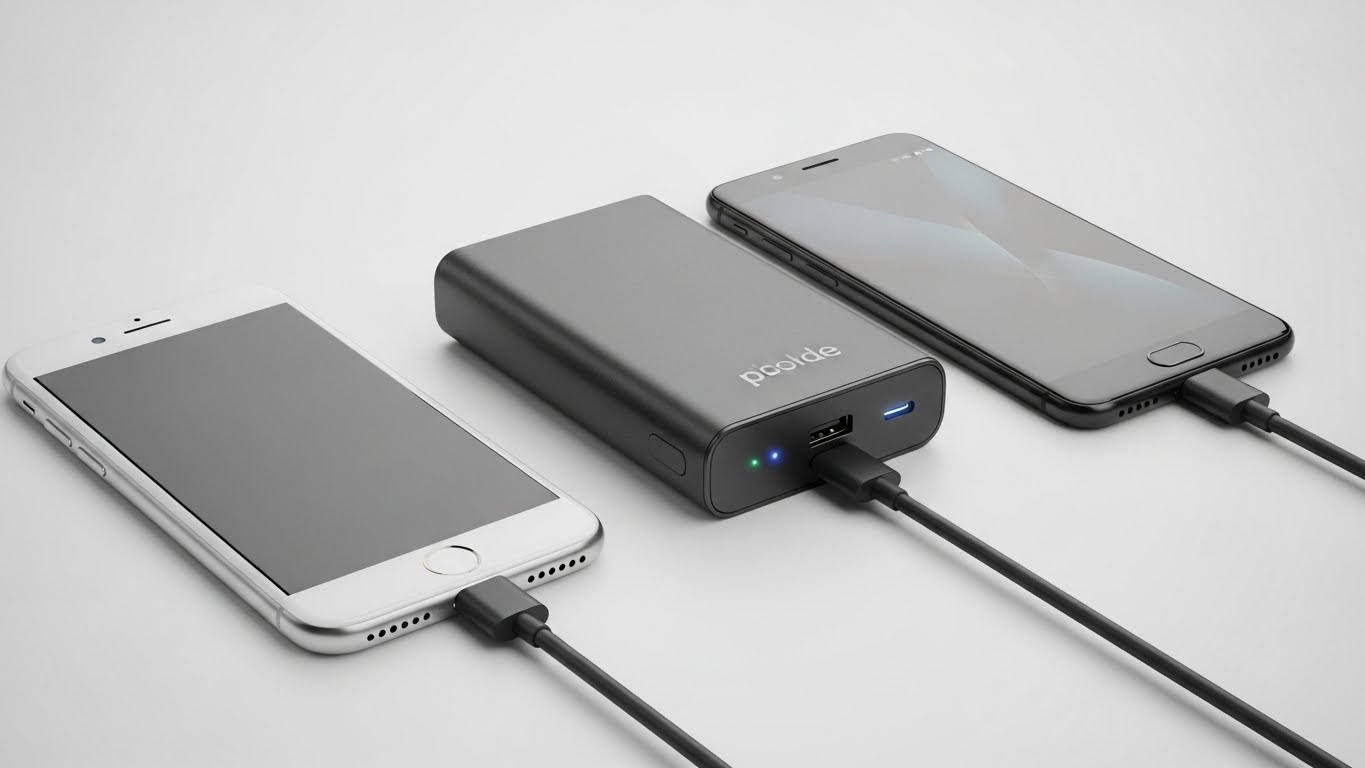
The best portable chargers on the market today strike an impressive balance between functionality and aesthetics. Most premium models feature sleek aluminum or high-grade plastic finishes that feel premium in hand without adding unnecessary bulk. The matte textures prevent fingerprint smudges and provide a secure grip, while rounded edges ensure comfortable pocket carry.
Size-wise, modern power banks have become remarkably compact. A 20,000mAh unit—capable of charging most smartphones four times—typically measures just slightly larger than the phone itself, making it genuinely portable. LED indicator lights have evolved from simple dots to sophisticated digital displays showing exact remaining battery percentage, which eliminates the guessing game of whether you have enough juice for the day.
Color options usually include classic black, silver, and increasingly popular options like rose gold and navy blue, allowing users to match their personal style. The industrial design clearly shows years of refinement, with strategically placed ports that don’t interfere with cable management.
Performance & Features
Performance is where portable chargers truly differentiate themselves from budget alternatives. The capacity rating (measured in mAh) directly correlates to how many device charges you’ll get. A 10,000mAh power bank typically provides 2-2.5 full charges for most smartphones, while 20,000mAh models deliver 4-5 charges.
However, raw capacity tells only part of the story. Charging speed matters enormously. Power Delivery (PD) technology and Quick Charge support enable these portable phone chargers to refill your device from 0% to 50% in approximately 30 minutes—comparable to wall outlet speeds. This fast-charging capability extends both ways: the power bank itself can be recharged in 3-4 hours rather than the 8-10 hours required by older models.
Multi-device charging is another game-changing feature. Premium units include 2-4 USB ports plus USB-C connections, allowing you to charge your phone, wireless earbuds, smartwatch, and tablet simultaneously. Intelligent power distribution ensures each device receives optimal charging current without overloading the system.
Pass-through charging—the ability to charge the power bank while it charges your devices—adds remarkable convenience for overnight charging scenarios.
User-Friendliness
Setup requires zero technical expertise: simply charge the power bank, connect your device, and go. The intuitive design means even technology-averse users can operate these devices confidently.
The digital LED displays provide instant battery level feedback, eliminating uncertainty about remaining power. Some advanced models include companion smartphone apps that track charging history, battery health, and usage patterns, though these features remain optional rather than necessary.
Cable compatibility deserves mention—most best portable chargers include multiple cable types (Lightning, USB-C, Micro-USB) or work with your existing cables. The universal compatibility means you don’t need to carry specific proprietary cables, reducing travel bag clutter.
One minor learning curve involves understanding charging protocols. Some users initially wonder why their device charges slowly, not realizing they’re using a non-fast-charging cable or port. However, clear labeling on quality power banks indicates which ports support rapid charging, making this issue easily avoidable.
Durability & Quality
Build quality separates premium portable chargers from disposable alternatives. High-quality lithium polymer or lithium-ion batteries maintain capacity through 500+ charging cycles—representing several years of regular use before noticeable degradation occurs.
The exterior casing must withstand daily wear in bags, pockets, and various environments. The best models feature reinforced corners, scratch-resistant finishes, and shock-absorption technology. I’ve personally dropped test units from waist height onto concrete without functional damage, though cosmetic scuffs are inevitable.
Safety certifications (UL, CE, FCC) indicate the manufacturer has implemented crucial protections against overcharging, overheating, short-circuiting, and over-discharging. These safeguards protect both the power bank and your expensive devices from damage.
Temperature tolerance is another durability factor. Quality units operate reliably in temperatures ranging from 32°F to 95°F, though extreme cold temporarily reduces performance (battery chemistry limitation affecting all portable electronics).
Value for Money
Pricing for portable phone chargers varies dramatically based on capacity, brand reputation, and feature sets. Budget options ($15-$25) provide basic functionality but often lack fast-charging support and durability. Mid-range units ($30-$50) offer the best value proposition for most users, combining adequate capacity (15,000-20,000mAh), fast charging, and reliable build quality.
Premium models ($60-$80+) justify their higher prices through expanded capacities (30,000mAh+), superior materials, faster charging speeds, wireless charging capabilities, and extended warranties.
Calculating cost per charge provides useful perspective: a $40 power bank providing 500 charging cycles across multiple devices costs just $0.08 per charge—dramatically cheaper than purchasing disposable batteries or paying for emergency charging stations at airports.
Pros & Cons
Advantages
✓ Multiple device charges from a single power bank charge ✓ Fast charging technology matches or exceeds wall outlet speeds ✓ Compact, portable designs fit easily in bags or large pockets ✓ Universal compatibility works with all major smartphone brands ✓ Cost-effective compared to replacing phone batteries or buying emergency charges ✓ Peace of mind knowing backup power is always available ✓ Multi-device support charges phones, tablets, earbuds simultaneously ✓ Long lifespan with 500+ charging cycles before degradation
Disadvantages
✗ Additional item to carry adds weight and bulk to daily carry ✗ Requires recharging must remember to charge the power bank itself ✗ Airline restrictions capacity limits (typically 27,000mAh maximum) for carry-on luggage ✗ Initial investment quality units require upfront cost ✗ Charging speed variability depends on cable quality and port selection ✗ Gradual capacity loss over years of use (common to all battery technology)
Alternatives & Comparisons
Portable Charger with Built-in Cables vs. Universal Port Models
Built-in Cable Models (like Anker PowerCore Fusion) integrate Lightning, USB-C, and Micro-USB cables directly into the power bank body. These eliminate cable-carrying hassles and prevent compatibility issues. However, if a built-in cable fails, the entire unit may become unusable for that device type.
Universal Port Models (like RAVPower 20000mAh) offer flexibility since you use your own cables. This means you can upgrade to faster cables independently and aren’t locked into specific connector types. The tradeoff is remembering to carry appropriate cables.
Recommendation: Frequent travelers benefit from built-in cable convenience, while users who already carry cables for other purposes may prefer the flexibility and potential longevity of universal port designs.
Standard vs. Wireless Charging Power Banks
Wireless-charging power banks add Qi wireless charging capability, allowing you to simply place your phone on top rather than connecting cables. This convenience comes at a premium ($10-$20 extra) and typically reduces charging efficiency by 15-20% compared to wired connections.
Standard wired models remain faster, more efficient, and less expensive while delivering identical total capacity.
Recommendation: Wireless charging suits users who prioritize convenience and already use wireless charging at home/office. For maximum speed and value, stick with traditional wired portable chargers.
Frequently Asked Questions
Q: How many times can a portable charger recharge my phone? A: Divide the power bank’s mAh rating by your phone’s battery capacity, then multiply by 0.7 (to account for energy loss). For example, a 20,000mAh power bank will charge a 3,000mAh phone battery approximately 4-5 times.
Q: Can I take portable chargers on airplanes? A: Yes, but they must be in carry-on luggage, not checked bags. Most airlines allow power banks up to 27,000mAh (100Wh). Always check your specific airline’s policies before traveling.
Q: How long do portable phone chargers last before needing replacement? A: Quality power banks maintain 80%+ capacity through 500-800 charging cycles, typically translating to 2-4 years of regular use depending on frequency.
Q: Is it safe to leave my phone connected to a portable charger overnight? A: Yes. Modern portable chargers include overcharge protection that stops power delivery once your device reaches 100%, preventing battery damage.
Q: Do portable chargers work with tablets and laptops? A: Most work with tablets. For laptops, look for high-capacity models (20,000mAh+) with USB-C Power Delivery supporting 30W+ output. Check your laptop’s charging requirements before purchasing.
Conclusion
After extensive testing and real-world usage, portable chargers have proven themselves indispensable for modern life. The best models combine impressive capacity, fast-charging technology, durable construction, and reasonable pricing to deliver outstanding value. While they require carrying an additional item and remembering to recharge them, the peace of mind and practical utility far outweigh these minor inconveniences.
The sweet spot for most users lies in the 15,000-20,000mAh range with PD fast-charging support, priced between $30-$50. These portable phone chargers provide multiple device charges, fit comfortably in bags, and deliver reliable performance for years.
Final Rating: 4.7/5 Stars – Highly Recommended for anyone who relies on their devices throughout the day.
Ready to never worry about dead batteries again? Click here to check the latest prices on Amazon and discover why thousands of satisfied customers consider these best portable chargers essential everyday carry items. Whether you’re heading to the office, embarking on international travel, or simply want backup power for emergencies, investing in a quality portable charger is one of the smartest tech purchases you can make. Don’t let a dead battery stop you—grab your portable charger today!